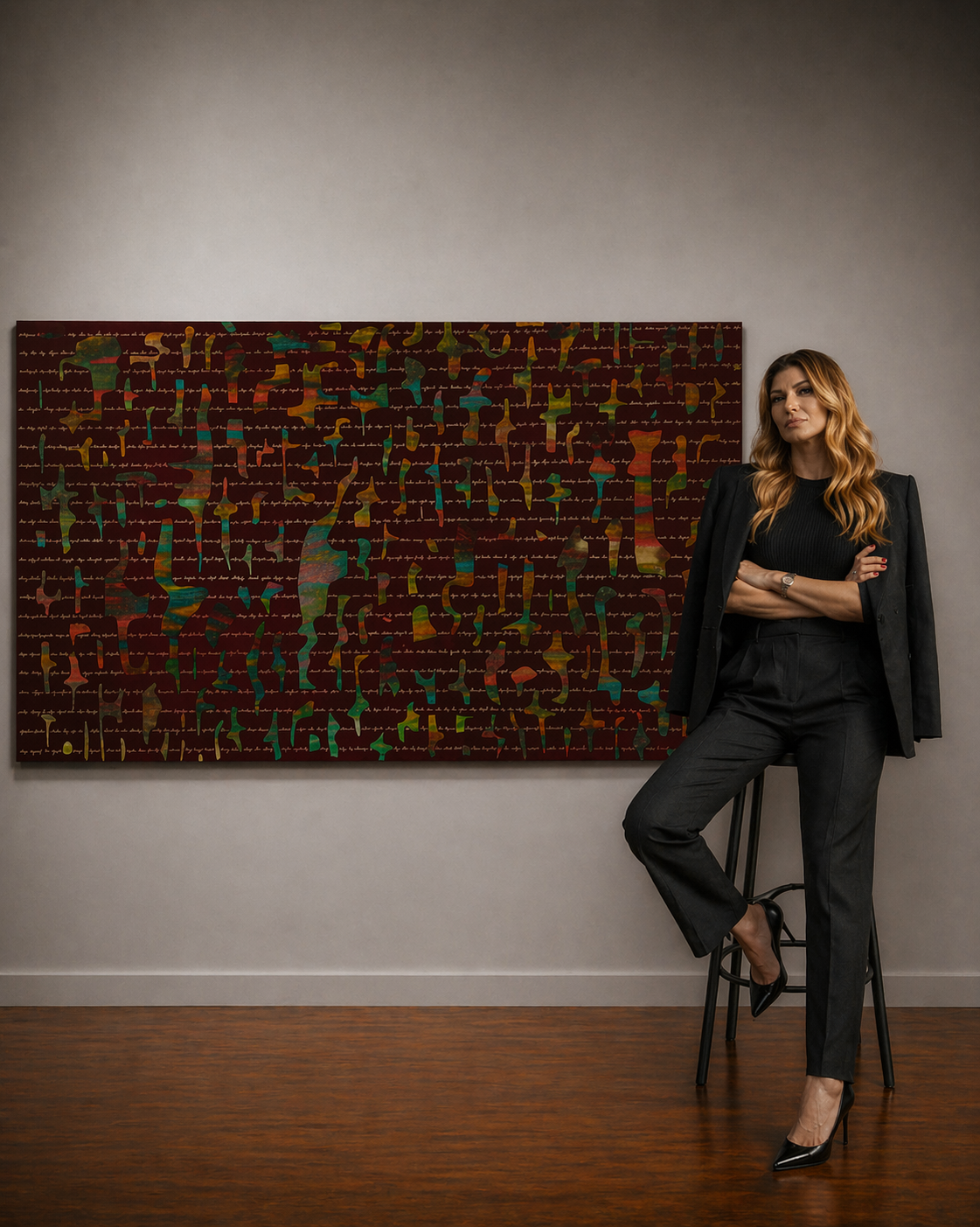
In this interview for Mojito Magazine, Madam P reveals a practice shaped not by a linear process, but by intensity and persistence. Her work exists in the “in-between,” where form is not merely constructed but compelled into being, and where the viewer becomes an essential catalyst for its completion.
Madam P, could you take us through the emergence of your creative process? How does a work evolve from its first impulse into its final form?
My process never unfolds in a linear fashion. I see it less as a method and more as an inevitable movement. It begins at the point where language collapses—where thought and emotion exist in a raw, uncontained state. For me, “making” is not about producing an object, but about initiating an encounter with the viewer. The work is only complete once that encounter takes place. The conceptual ground of my practice is built on a deliberate tension between the rational structures of the North and the intuitive, layered aesthetics of the East. That tension is not something I seek to resolve; it is the very force that drives the work forward.
At the beginning of a new project, what tends to surface first: concept, material, or visual form? How does this hierarchy shape your practice?
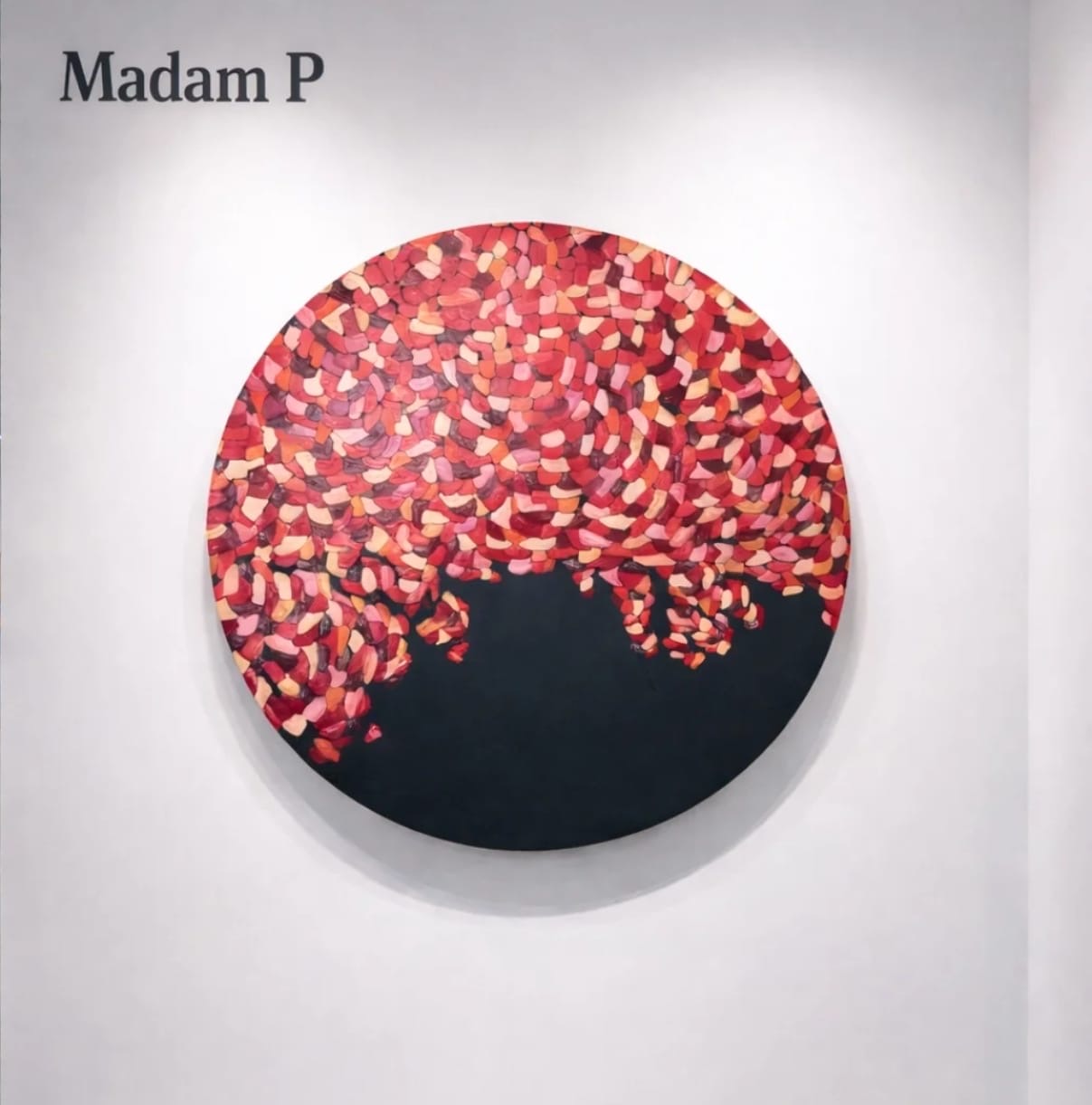
I never begin by asking what comes first; such a question reduces the inherent complexity of the process. It usually starts with an intensity I cannot fully articulate. At that stage, there is no material, no form—only a persistent core of an idea that refuses to dissipate. If it stays with me, I follow it. What matters is not its initial clarity, but its insistence—how deeply it can unfold over time. Material and form are not merely added onto the idea; they are forced into existence by it.
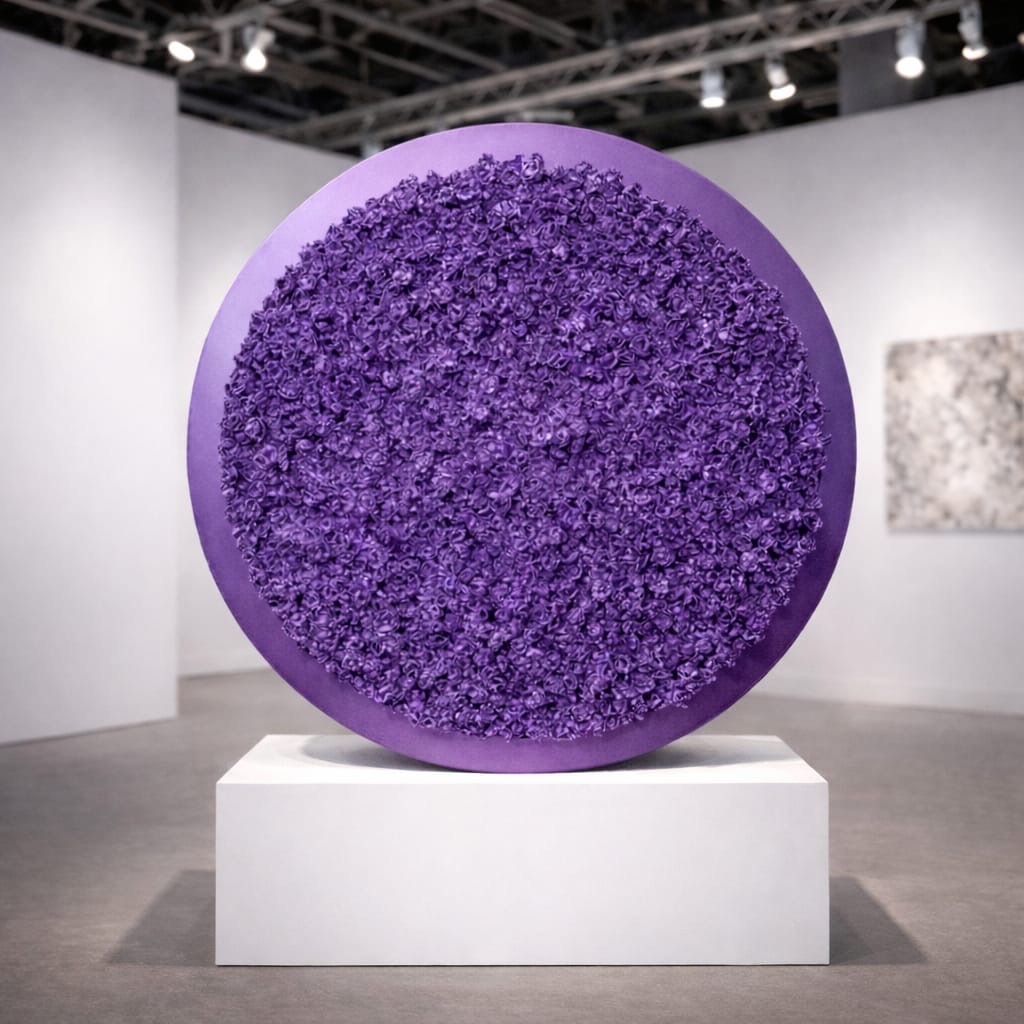
You often speak about the importance of focus and the act of filtering “external noise.” How do you cultivate and sustain this clarity?
Filtering the external world is not a preference for me; it is a necessity. The art world is constantly speaking: trends, expectations, speed. If you listen too closely, you risk losing your own voice. I position myself outside that noise. Focus, for me, is a discipline of reduction—seeing less, hearing less, and going deeper. Staying on the surface is the greatest threat to any meaningful work.
Throughout your career, you’ve navigated various obstacles. Could you share a defining challenge and how it reshaped your approach?
I have never approached difficulty as something to avoid; I read it as a signal to shift direction. When the boundaries of the art world began to narrow, I didn’t accept them—I expanded them. I refused to confine my practice to a single field. I deliberately deconstructed my own methods and rebuilt them on my own terms. This rupture allowed me to systematically eliminate expectations that did not belong to me. This was not an adaptation; it was a refusal. It was precisely at that point that I gained full control over my work.
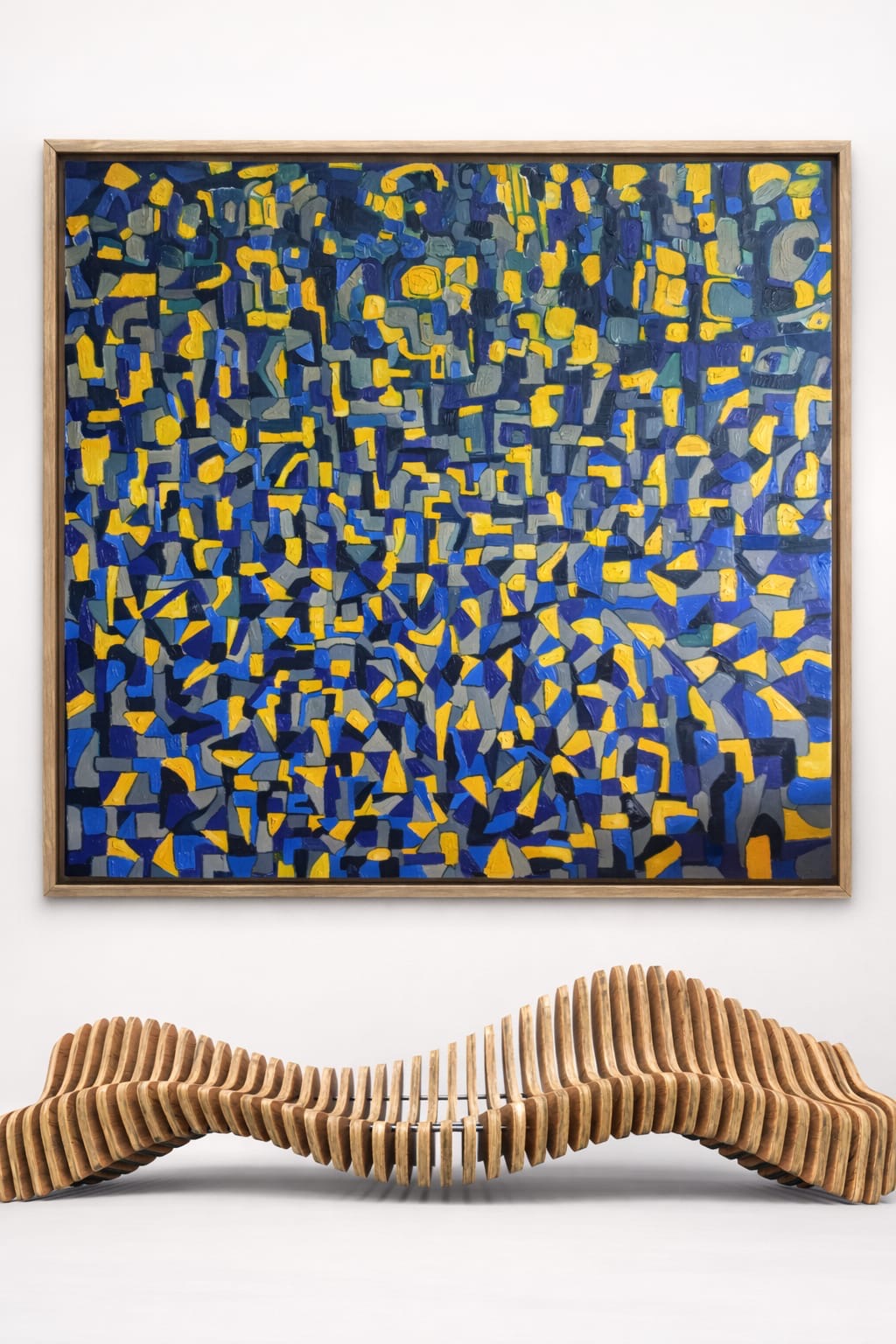
When engaging with institutions or large-scale collaborations, how do you preserve the integrity of your artistic vision? What boundaries do you consider essential?
When I enter a collaboration, I define the framework very clearly from the outset. At the start of the project, I make explicit which aesthetic and conceptual decisions belong solely to me. Without that clarity, the process can easily lose its way. For me, the point is not to adapt, but to continue producing within a new context while preserving my own visual language. Throughout the project, I constantly question whether each decision still aligns with the original concept. If something merely “fits” but weakens the idea, I step back from it. A collaboration only becomes meaningful when this balance is maintained. Otherwise, the outcome belongs to no one and holds no lasting value.
How do you sense that an idea carries enough depth and resonance to evolve into a complete work?
Not every idea deserves to become a work; in fact, most do not. I have only one measure: does the idea grow stronger over time, or does it fade? If an idea weakens after its initial impact, I leave it behind. But if it keeps opening new spaces, I follow it. I am not interested in speed. Depth always matters more.
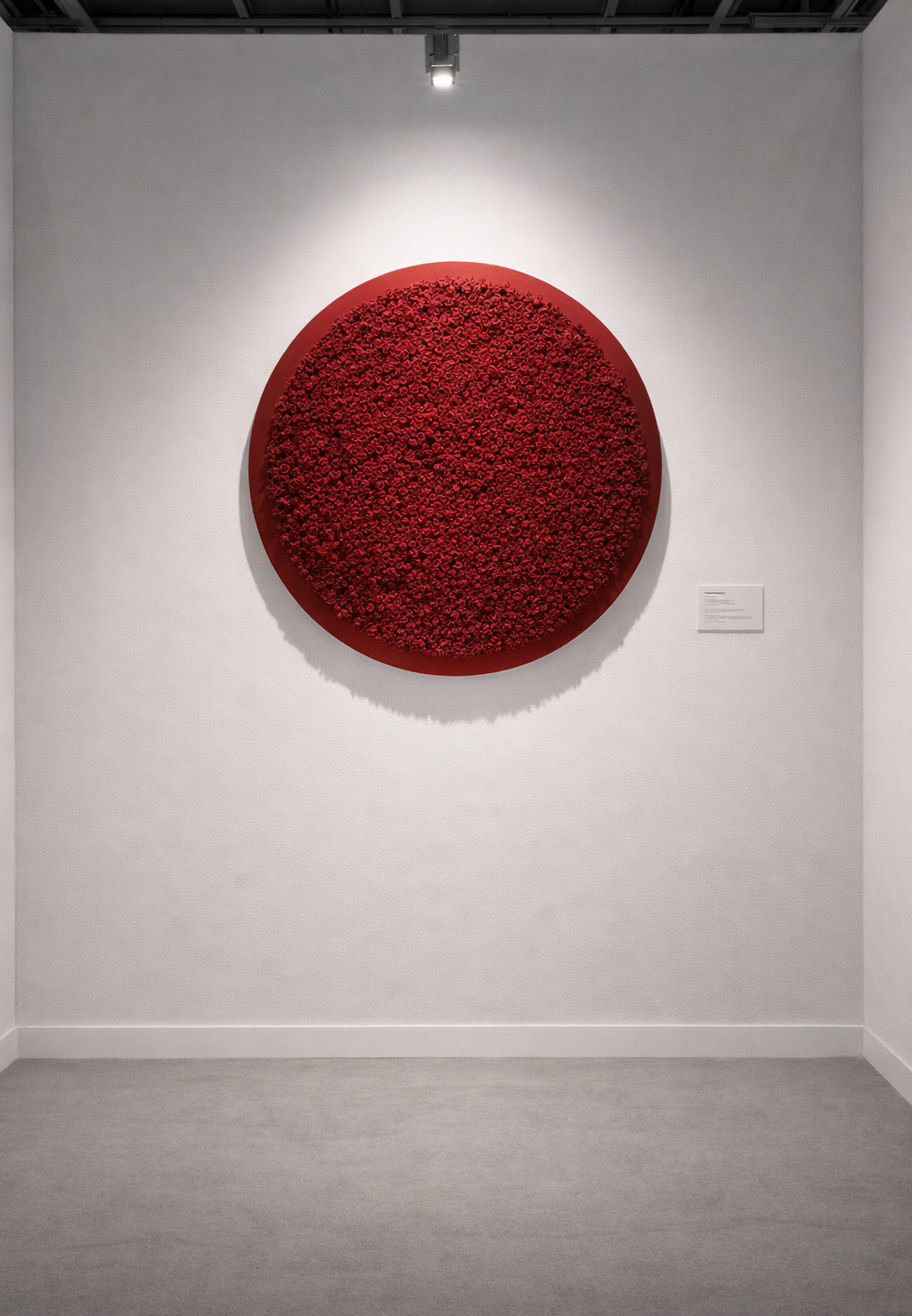
Looking ahead, what new direction or dimension are you currently exploring within your practice?
My current focus is on moving fully into the realm of experience. I am interested in transforming the work from something that is seen into something that is inhabited. I want to further dissolve the boundaries between space, viewer, and artwork. For me, the next step is to move beyond the object.